Luxor Temple is one of the most remarkable ancient Egyptian temples, celebrated for its monumental statues, towering columns and exceptional connection to the religious history of Thebes. Located on the east bank of the Nile in southern Egypt, it has stood at the heart of Luxor's cultural landscape for thousands of years.
Unlike many Egyptian temples primarily associated with the worship of a single deity in a secluded sanctuary, Luxor Temple played an important role in royal ceremonies and the annual Opet Festival. During this celebration, sacred images of Amun, Mut and Khonsu travelled in procession from Karnak to Luxor Temple.
The monument was not built by one pharaoh. Amenhotep III created much of its central architectural core, while Ramesses II added the impressive entrance complex, courtyard and colossal royal statues. Other rulers, including Hatshepsut, Tutankhamun and Horemheb, also contributed to its long history.
Today, Luxor Temple is an important archaeological landmark and a remarkable place to study ancient Egyptian architecture, religious traditions and royal imagery. Its location in the modern city also makes it a distinctive part of Luxor's living urban landscape.
Where Is Luxor Temple Located in Egypt?
Luxor Temple is situated on the east bank of the Nile River in Luxor, a city in Upper Egypt approximately 650 kilometres south of Cairo by road. The temple occupies a prominent position within the modern city, close to the Nile and the central urban area.
In ancient times, the city was known as Thebes and served as one of Egypt's major religious and political centres. The archaeological landscape of Thebes includes Luxor Temple and Karnak Temple on the east bank, as well as the Valley of the Kings, the Temple of Hatshepsut and other important monuments on the west bank.
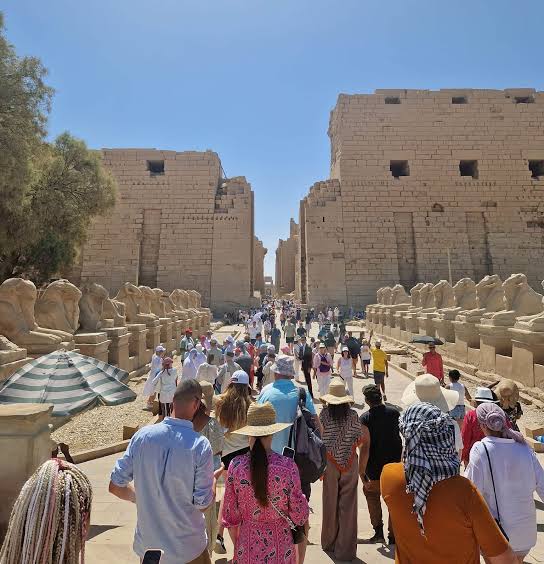
Luxor Temple stands approximately three kilometres south of Karnak Temple. The two monuments were linked by the ancient Avenue of Sphinxes, a processional route that played an important role in religious celebrations.
Ancient Thebes and its Necropolis were inscribed on the UNESCO World Heritage List in 1979. The designation recognizes the exceptional historical and archaeological value of the temples, tombs and settlements that survive throughout the region.
The History of Luxor Temple: From the Pharaohs to the Roman Era
Understanding Luxor Temple requires looking at several periods of Egyptian history. Its architecture reflects successive construction projects, changing religious practices and the different ways rulers used monuments to express their authority.
Early foundations and Queen Hatshepsut
The oldest surviving evidence associated with Luxor Temple reaches back to the Eighteenth Dynasty, during the New Kingdom. A shrine associated with Queen Hatshepsut represents an early stage in the site's architectural history.
Hatshepsut was one of ancient Egypt's most prominent female pharaohs. Her reign was marked by ambitious building projects, religious patronage and extensive efforts to reinforce royal authority through monuments and inscriptions.
The earliest remains do not represent the full temple visitors see today. Much of the complex developed through later construction, particularly during the reigns of Amenhotep III and Ramesses II.
Amenhotep III and the main temple
Amenhotep III, who ruled during the Eighteenth Dynasty, commissioned much of the central part of Luxor Temple around the fourteenth century BCE. His reign was associated with prosperity, diplomatic activity and an impressive programme of royal architecture.
The buildings associated with Amenhotep III include the elegant columned areas and the Great Colonnade, a monumental passage characterized by two rows of seven large columns. Its scale and decoration reflect the artistic achievements of the Eighteenth Dynasty.
Tutankhamun and Horemheb
Following Amenhotep III, the temple continued to develop. Tutankhamun and Horemheb are associated with the completion and decoration of important areas, including scenes connected with the Opet Festival.
These inscriptions are especially valuable because they show how religious ceremonies were represented on temple walls. They also demonstrate that the monument was a continuing royal project rather than a building completed by one ruler.
Ramesses II and the monumental entrance
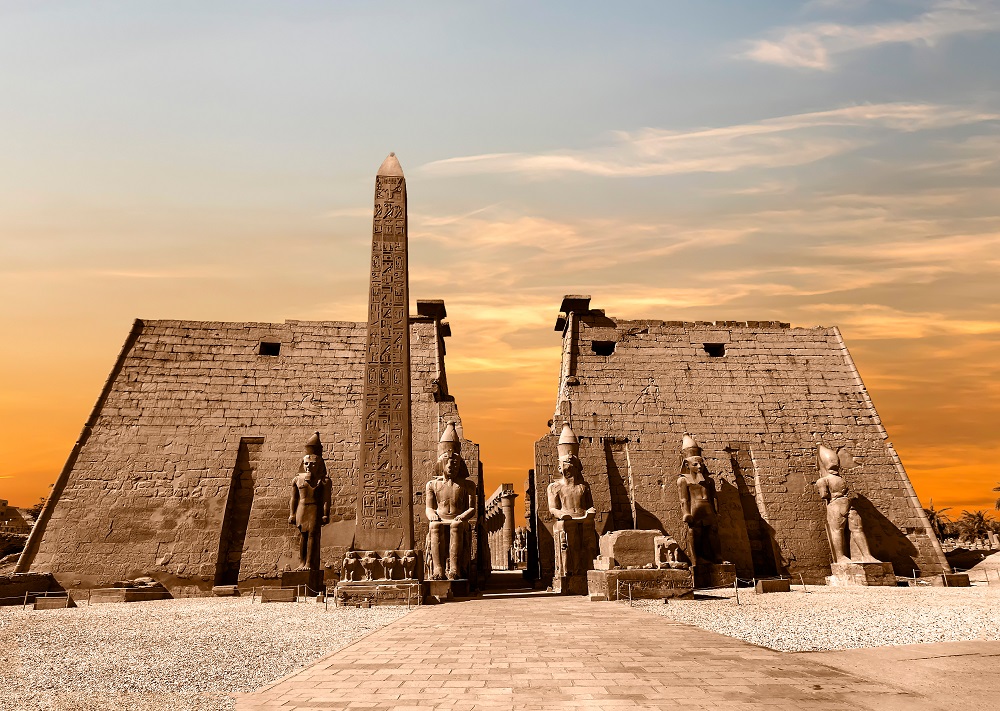
Ramesses II made major additions to Luxor Temple during the Nineteenth Dynasty. His building programme transformed the approach to the sanctuary with a large pylon, an open courtyard and colossal statues bearing the image of the king.
The entrance is among the most recognizable parts of the complex. Its statues and monumental proportions demonstrate how royal sculpture could communicate authority and associate the pharaoh with the sacred landscape.
Later Egyptian and Roman periods
Luxor Temple continued to be used and modified after the New Kingdom. Later Egyptian rulers left their own marks, while Roman authorities adapted parts of the complex for new purposes.
During the Roman period, a fortification was established around the temple, and an inner room was adapted as a sanctuary with painted decoration associated with the emperor and his co-rulers. These later features illustrate how the monument's function changed over time.
Why Was Luxor Temple Important in Ancient Egypt?
Luxor Temple was closely associated with the religious life of ancient Thebes. Its ceremonial role connected royal authority with the gods and with traditions that were central to Egyptian ideas about kingship and the proper order of the world.
The temple is particularly associated with Amun, one of the most important gods in the Theban religious tradition. Amun was closely linked with Ra, the sun god, forming the widely known divine figure Amun-Ra. The wider religious landscape of Thebes also included Mut and Khonsu, who were connected with Amun in the Theban divine family.
Religious ceremonies involved offerings, processions and the movement of sacred images. These activities were conducted within carefully organized temple spaces by priests and other members of the religious establishment.
The temple also expressed political ideas. Royal inscriptions and statues presented the pharaoh as a ruler whose authority was supported by the gods. Through architecture, ritual and decoration, Luxor Temple became a setting where religious belief and royal power intersected.
Its significance was therefore not limited to worship inside the building. The temple formed part of a wider ceremonial landscape that included Karnak, the Avenue of Sphinxes and other sacred places throughout ancient Thebes.
The Colossal Statues of Ramesses II at Luxor Temple
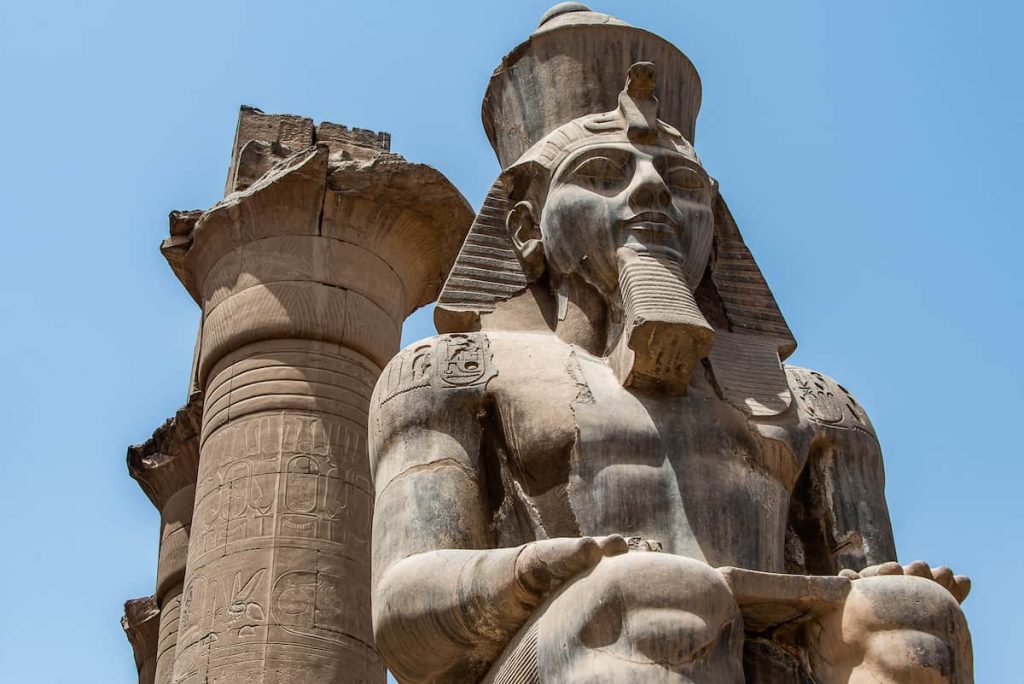
One of the most memorable features of Luxor Temple is its collection of monumental royal statues. The sculptures associated with Ramesses II were designed to make a powerful impression on visitors approaching the temple entrance.
Ramesses II ruled Egypt during the Nineteenth Dynasty and commissioned an extensive programme of monuments across the country. His statues frequently depict the king in an idealized form, emphasizing stability, strength and his relationship with the gods.
What do the statues represent?
Royal statues in ancient Egypt were more than portraits in the modern sense. They were carefully designed representations of kingship. Their scale, posture, crowns and inscriptions communicated the ruler's identity and status.
At Luxor Temple, the statues work together with the monumental gateway and surrounding architecture. They create a dramatic entrance while reinforcing the authority of the king whose building programme shaped the complex.
Why are the sculptures important today?
These sculptures provide evidence of ancient Egyptian stone carving, artistic conventions and royal representation. Studying their features and inscriptions helps archaeologists understand the political and religious messages that rulers wanted to preserve for future generations.
Their survival also gives modern visitors a direct encounter with the scale of ancient Egyptian monumental art. The statues remain a central part of the visual identity of Luxor Temple.
The Luxor Temple Obelisk: A Monument of Ancient Engineering
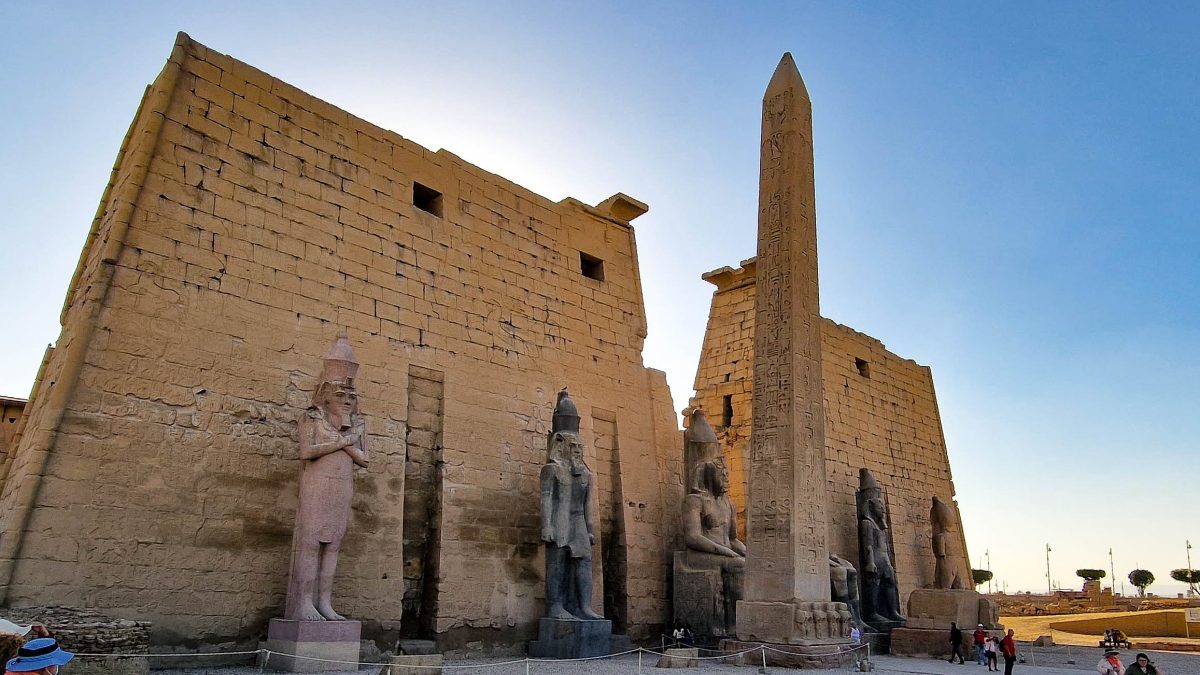
The entrance complex of Luxor Temple was once associated with a pair of monumental obelisks commissioned by Ramesses II. Only one remains at the temple today; its companion was moved to the Place de la Concorde in Paris in the nineteenth century.
An obelisk is a tall, tapering stone monument that typically ends in a small pyramid-shaped point. Ancient Egyptian obelisks were associated with royal dedication and solar symbolism, and their inscriptions often recorded the name and titles of the ruler who commissioned them.
Creating a large obelisk required sophisticated quarrying, carving, transport and installation techniques. The monument was usually carved from a single piece of stone, making its production a major engineering achievement.
The surviving obelisk at Luxor Temple also illustrates how ancient monuments acquired new meanings beyond Egypt. The relocation of its companion to Paris reflects the complex modern history of Egyptian antiquities and their presence in public spaces around the world.
The Great Colonnade: Columns and Ancient Egyptian Architecture

The Great Colonnade is one of the most distinctive architectural features of Luxor Temple. Associated with the building programme of Amenhotep III, it consists of two rows of seven monumental columns and forms an impressive passage through the temple.
The columns are notable for their scale and plant-inspired forms. Ancient Egyptian architects frequently incorporated imagery associated with papyrus and other plants into stone architecture, combining structural design with symbolic decoration.
Why were columns so important?
Columns supported architectural structures, but their appearance also contributed to the religious atmosphere of a temple. Their height and arrangement guided movement through the building and helped distinguish different architectural spaces.
The arrangement of the Great Colonnade creates a sense of rhythm and scale. Repeated columns direct the eye along the passage, while the carved surfaces provide a record of ancient artistic traditions.
Reliefs and inscriptions
Carved scenes and inscriptions preserve information about religious rituals, royal figures and the ceremonies associated with Luxor Temple. Some of the decoration relates to the Opet Festival, making the colonnade particularly important for understanding the temple's ceremonial function.
These reliefs must be interpreted in their historical context. Royal images often present idealized versions of events and emphasize the relationship between the king, the gods and the order of the Egyptian world.
The Avenue of Sphinxes: The Ancient Road from Karnak to Luxor
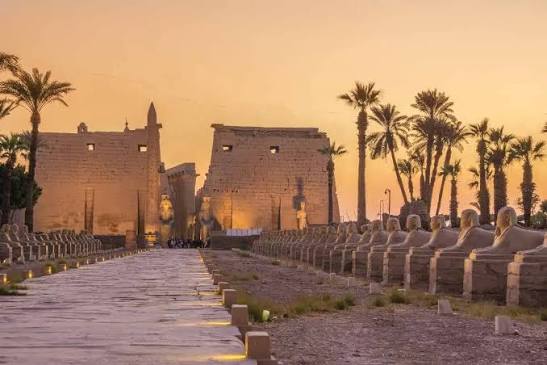
The Avenue of Sphinxes is one of the most important archaeological features of Luxor. This ancient processional route extends for approximately 2.7 kilometres between Luxor Temple and the Karnak temple complex.
The avenue was lined with statues depicting sphinxes in different forms. Some have human heads, while others feature ram heads associated with Amun. The statues and the route formed part of a ceremonial landscape that connected major religious institutions in ancient Thebes.
What was the Avenue of Sphinxes used for?
The route was associated with religious processions and festivals, particularly the Opet Festival. During these ceremonies, sacred images were carried between Karnak and Luxor Temple, accompanied by ritual activities that reinforced the connection between the two sanctuaries.
The avenue demonstrates that the ancient Egyptians designed religious spaces at more than one scale. A temple was part of a wider environment that could include roads, statues, courtyards and other buildings associated with ceremonial movement.
The rediscovery and restoration of the avenue
Sections of the ancient route were gradually uncovered through archaeological excavation over many decades. Restoration and development work helped reveal additional statues and reconnect the historic route between the two temples.
The avenue's modern appearance offers visitors an opportunity to appreciate the scale of ancient Thebes and the relationship between its principal religious monuments.
To understand the northern sanctuary and its monumental architecture, read our guide to Karnak Temple
The Opet Festival: Religion, Royal Power and Ancient Thebes
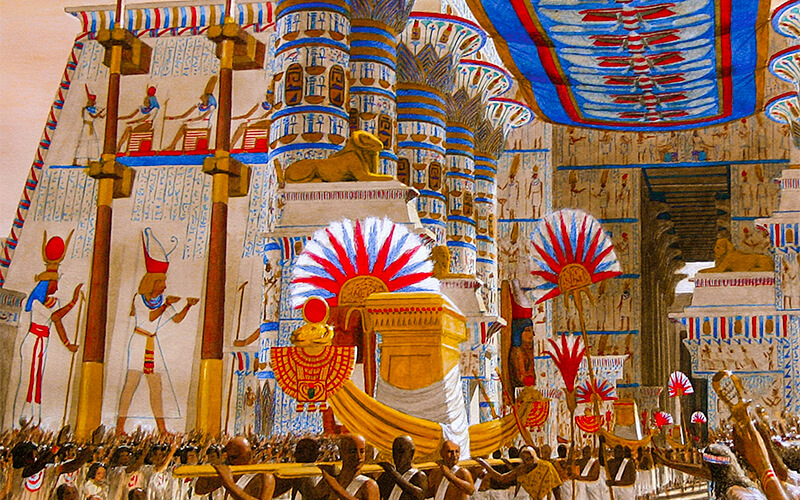
The Opet Festival was one of the important religious celebrations associated with ancient Thebes. It connected Karnak Temple with Luxor Temple through a ceremonial procession involving sacred images of Amun, Mut and Khonsu.
The festival is often discussed in connection with the relationship between the gods and the Egyptian king. Rituals helped express the idea that royal authority was connected with divine approval and the maintenance of order.
How did the procession work?
During the celebration, sacred images were transported in ceremonial barques between the temples. These processions passed through the sacred landscape of Thebes, including the route associated with the Avenue of Sphinxes.
The precise arrangements and duration of the festival changed across different historical periods. Temple inscriptions and reliefs provide important evidence for how the event was represented and understood in ancient Egypt.
Why is the Opet Festival important to historians?
The festival helps researchers understand the connections between religious institutions, royal ceremonies and public ritual. It also explains why Luxor Temple's location and architectural orientation differ from those of many other ancient Egyptian temples.
By studying the festival together with the temple's architecture, historians can reconstruct how monuments were used and how religious traditions shaped the city around them.
The Divine Birth Reliefs and Royal Ideology
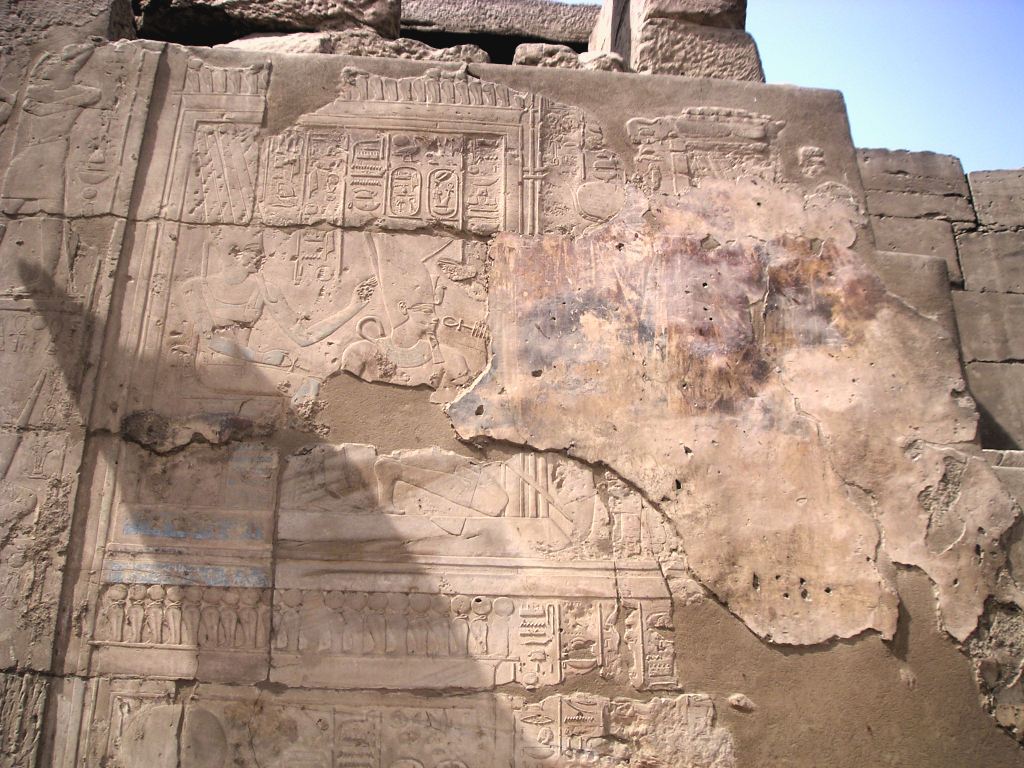
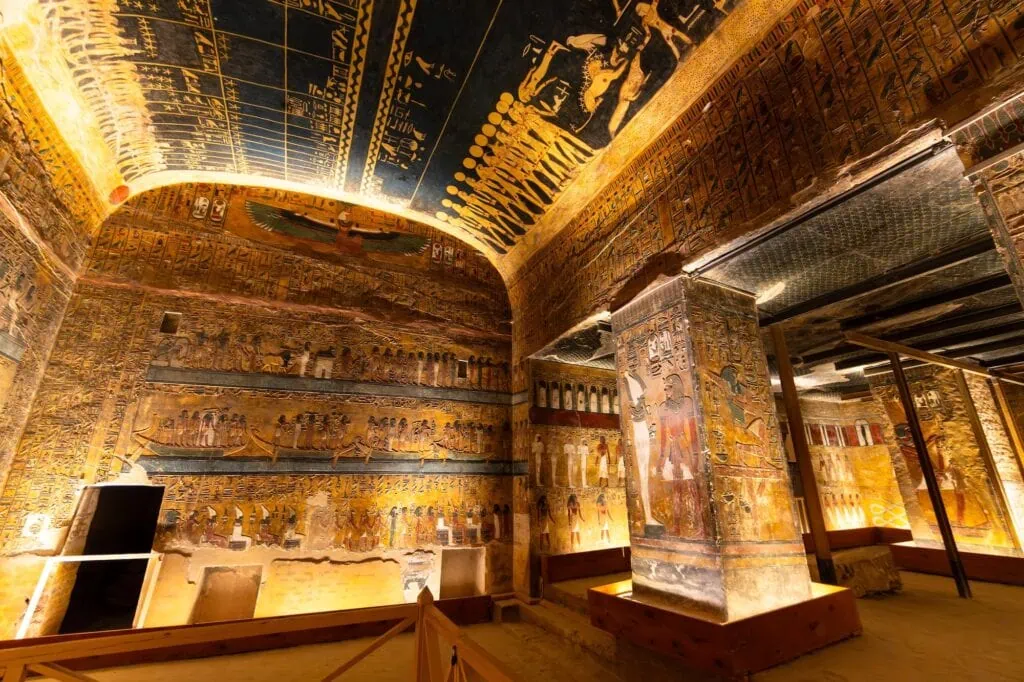
Some rooms at Luxor Temple preserve scenes associated with the concept known as the Divine Birth. These images form part of a royal religious narrative that presents the king's legitimacy through a connection with the god Amun-Ra.
In this narrative, the god takes the form of a human figure associated with the royal family. The resulting scenes present the king's birth and authority within a sacred framework.
Such reliefs should be understood as expressions of ancient Egyptian royal ideology rather than as ordinary historical records. They demonstrate how religious imagery was used to communicate ideas about kingship, legitimacy and divine protection.
Together with inscriptions and other architectural features, the Divine Birth scenes help explain why Luxor Temple was important to the royal and religious life of ancient Thebes.
Luxor Temple During the Roman Period
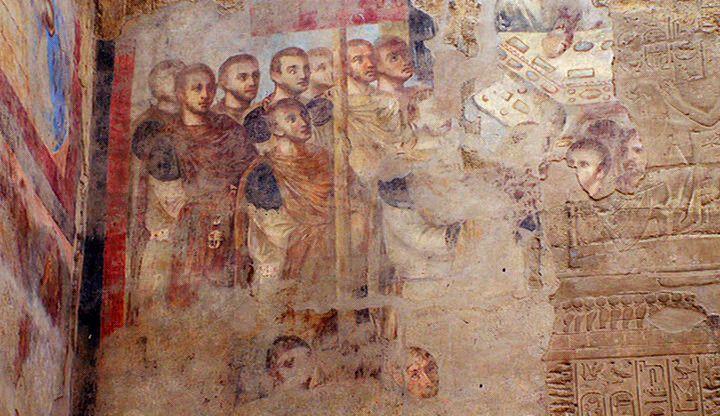
Luxor Temple did not lose all its importance when the New Kingdom ended. The complex continued to experience changes in function and decoration during later periods, including the Roman era.
Roman authorities incorporated parts of the temple into a fortified complex. An inner room was adapted as a sanctuary, and earlier Egyptian reliefs were covered and painted in a Graeco-Roman style.
Some of these later paintings have suffered damage or deterioration, and conservation efforts have sought to preserve and restore the surviving material.
The Roman-period remains are a reminder that historic sites rarely have only one chapter. Luxor Temple reflects a long sequence of religious, political and cultural changes that continued well beyond the age of the pharaohs.
What Makes Luxor Temple Architecture Unique?
Luxor Temple combines monumental gateways, open courtyards, columned passages, inner rooms and decorated walls. Its architectural arrangement reflects the different stages of construction that shaped the complex over many centuries.
The monumental pylon
The entrance pylon associated with Ramesses II consists of two large towers framing a central gateway. Monumental pylons established a dramatic entrance and marked the transition from the exterior environment into the temple precinct.
Courtyards and columned spaces
Open courtyards offered broad spaces within the temple, while colonnades and columned halls created more structured passages. The contrast between open and enclosed areas helped organize movement through the complex.
Religious imagery in stone
Columns, statues, inscriptions and reliefs formed an integrated architectural programme. Their imagery represented kings, deities and ceremonies, turning the temple into a place where religious ideas were communicated through both space and art.
These architectural features make Luxor Temple an important example of ancient Egyptian monumental design and a valuable resource for studying how temples developed over time.
Luxor Temple at Night: Architecture After Dark
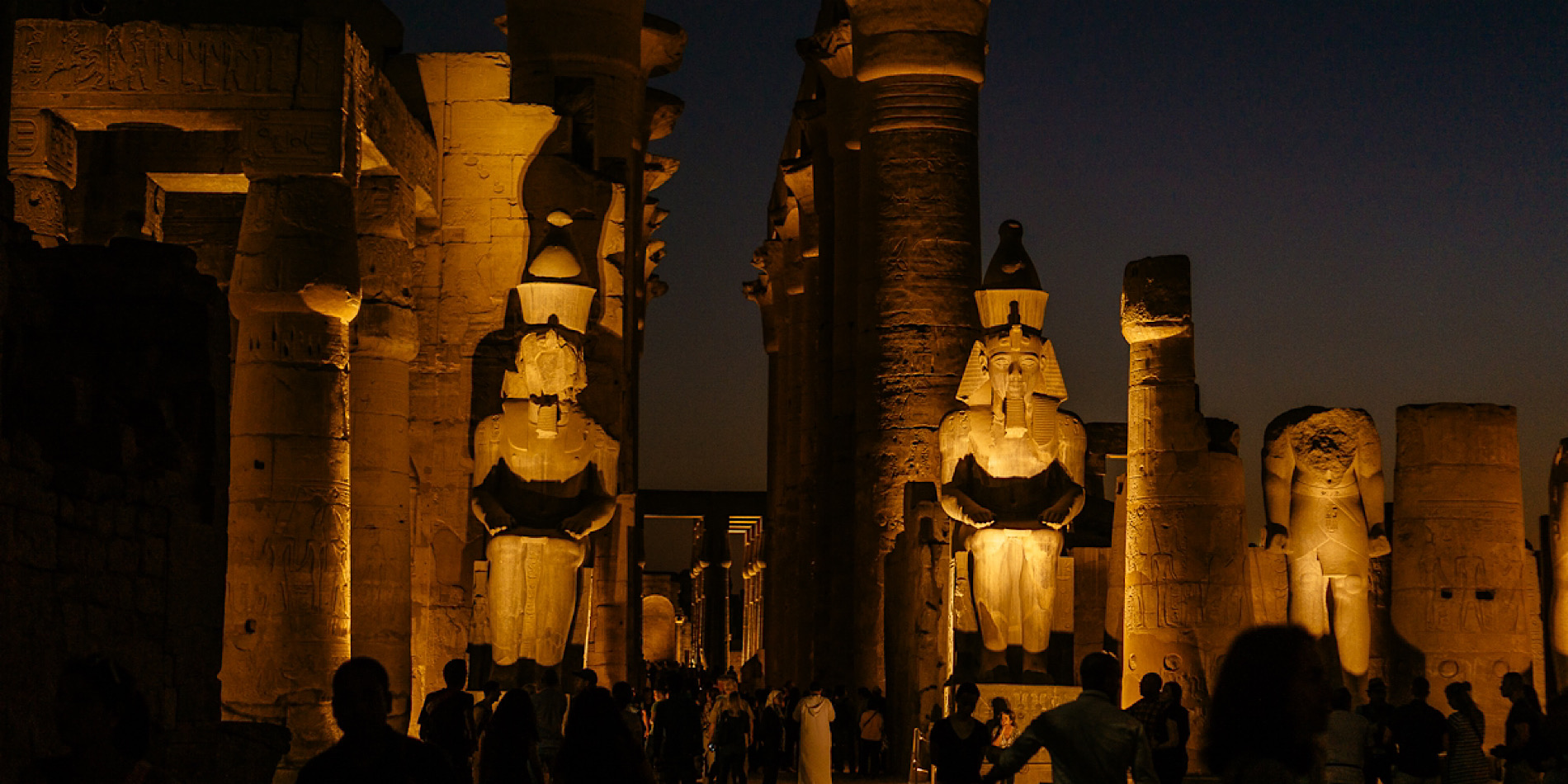
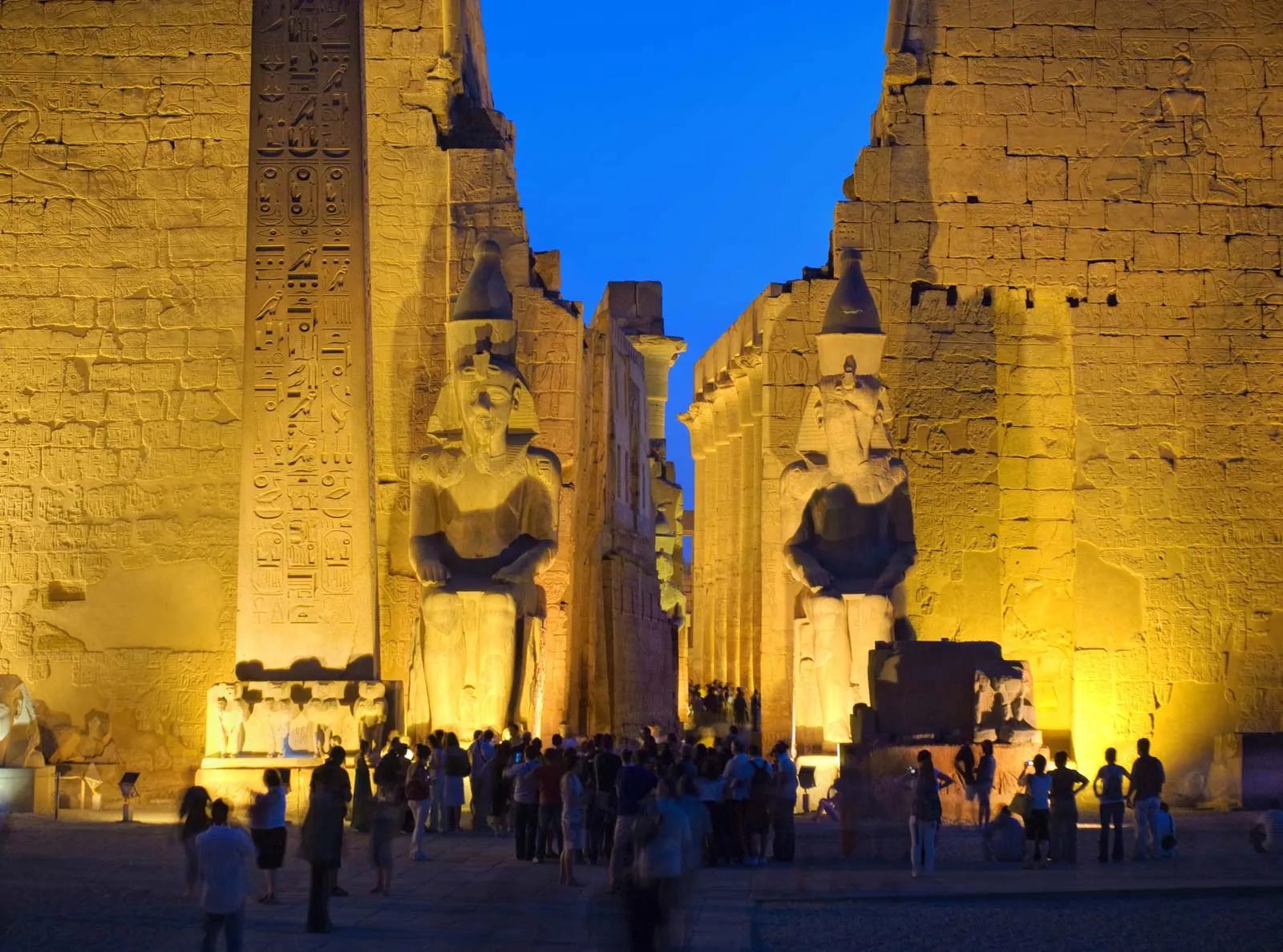
Luxor Temple is particularly well known for its appearance after dark, when illumination can emphasize the height of the columns, the details of the statues and the monumental proportions of the entrance.
Visiting an ancient temple in the evening can offer a different perspective from seeing it in strong daylight. Artificial lighting creates contrasts between the stone surfaces and the surrounding shadows, making architectural details stand out in a different way.
Evening visits can also provide an opportunity to observe the relationship between the ancient monument and the modern city of Luxor. The temple is not isolated in a remote archaeological landscape; it remains part of the urban environment.
Luxor Temple vs Karnak Temple: What Is the Difference?
Luxor Temple and Karnak Temple are two distinct monuments within the archaeological landscape of ancient Thebes. Their close relationship can make them seem like parts of a single site, but each has its own history and architectural character.
Luxor Temple is especially associated with royal ceremonies, the monumental entrance built by Ramesses II and the elegant columned architecture commissioned by Amenhotep III.
Karnak is a much larger temple complex that expanded through the contributions of many rulers across centuries. It includes the famous Great Hypostyle Hall, monumental gateways, obelisks, sanctuaries and other religious structures.
The Avenue of Sphinxes connected the two monuments and provided a ceremonial route for religious processions. For visitors interested in ancient Egyptian history, exploring both sites offers a more complete understanding of Thebes.
What to See at Luxor Temple: A Visitor's Guide
A visit to Luxor Temple becomes more meaningful when you understand what to look for. The complex contains several distinctive architectural and historical features that reveal different aspects of ancient Egyptian civilization.
- The monumental entrance: Observe the pylon associated with Ramesses II and its relationship with the statues that frame the approach.
- The royal statues: Look closely at the monumental sculptures and consider how their scale expressed royal authority.
- The obelisk: Examine the surviving monument and its relationship to the original entrance arrangement.
- The Great Colonnade: Notice the repeated columns and the way the passage draws attention toward the inner temple.
- Carved reliefs: Look for scenes showing rulers, deities, ceremonial activities and royal offerings.
- The inner rooms: Consider how the design moves from open courtyards toward more enclosed spaces.
- The later Roman remains: Remember that parts of the complex were adapted and redecorated during later periods.
- The Avenue of Sphinxes: Explore the relationship between Luxor Temple and the ancient route leading north toward Karnak.
Allow enough time to explore at a comfortable pace. Visitors interested in archaeology may want additional time to study the inscriptions and compare the different architectural styles throughout the complex.
Practical Tips for Visiting Luxor Temple, Egypt
Planning ahead can make a visit to Luxor Temple more comfortable and rewarding. Conditions in southern Egypt can be very hot, particularly during the warmer months, so preparation is important.
- Choose your visiting time carefully: Consider the weather and the current official opening hours when planning your visit.
- Wear comfortable footwear: You will be walking through a large archaeological site with stone surfaces and uneven areas.
- Bring water: Stay hydrated, especially during warmer weather.
- Allow time for photography: The entrance, columns and carved details provide many opportunities to appreciate the architecture.
- Consider visiting Karnak as well: The two temples are closely connected through the history of ancient Thebes.
- Check current ticket information: Admission prices, opening hours and access arrangements can change. Confirm the details before travelling.
- Respect the archaeological site: Follow posted instructions and avoid touching fragile or restricted surfaces.
Luxor Temple and the UNESCO World Heritage Site of Ancient Thebes
Luxor Temple forms part of Ancient Thebes and its Necropolis, a UNESCO World Heritage property inscribed in 1979. The property includes major monuments on both banks of the Nile and preserves evidence of the city's religious, political and cultural importance.
The east bank includes Luxor Temple and the Karnak temple complex. The west bank contains major funerary monuments, including the Valley of the Kings, the Valley of the Queens and the Temple of Hatshepsut.
Together, these sites demonstrate the remarkable architectural achievements of ancient Egypt and preserve a wealth of historical evidence in buildings, tombs, sculptures and inscriptions.
The World Heritage designation also highlights the importance of protecting these monuments for future generations. Their value lies not only in their appearance, but in the historical information they preserve.
Why Luxor Temple Is One of Egypt's Most Important Monuments
Luxor Temple is one of Egypt's most significant historical landmarks because it brings together monumental architecture, royal sculpture, religious ceremonies and evidence of cultural change across many centuries.
The work of Amenhotep III, Ramesses II and other rulers created a complex that reflects the artistic achievements and religious traditions of ancient Thebes. Its colossal statues, Great Colonnade, obelisk and decorated walls continue to reveal important details about ancient Egyptian society.
The Avenue of Sphinxes adds another dimension to the site's importance, showing how Luxor Temple was connected to Karnak through a wider sacred landscape. The Opet Festival helps explain why this connection mattered to the religious and political life of ancient Egypt.
From the pharaonic period to the Roman era, Luxor Temple experienced changes in use, architecture and decoration. Its surviving remains tell a story that extends far beyond the reign of any single king.
For anyone researching Luxor Temple Egypt, ancient Egyptian history or the architecture of the pharaohs, this monument offers an extraordinary opportunity to explore the history and cultural heritage of one of the world's most remarkable ancient civilizations.
Common questions
Frequently Asked Questions About Luxor Temple
1. Where is Luxor Temple located?
Luxor Temple is located on the east bank of the Nile River in Luxor, southern Egypt. It stands within the archaeological landscape of ancient Thebes, close to the modern city centre.
2. Who built Luxor Temple?
Luxor Temple was developed by several Egyptian rulers. Amenhotep III built much of the central complex, while Ramesses II added the monumental entrance and courtyard. Hatshepsut, Tutankhamun, Horemheb and later rulers also contributed to its history.
3. Why is Luxor Temple famous?
It is famous for its monumental architecture, colossal statues of Ramesses II, elegant columns, royal inscriptions, religious significance and connection with Karnak Temple through the Avenue of Sphinxes.
4. What was Luxor Temple used for?
Luxor Temple was an important religious and ceremonial centre. It played a major role in the Opet Festival, which connected the religious institutions of Karnak and Luxor through sacred processions.
5. What is the Avenue of Sphinxes?
The Avenue of Sphinxes is an ancient processional route approximately 2.7 kilometres long that connects Luxor Temple with Karnak Temple. It was associated with religious ceremonies in ancient Thebes.
6. Can you visit Luxor Temple at night?
Luxor Temple is known for its illuminated architecture after dark. However, opening hours and admission arrangements may change, so check the current official information before planning an evening visit.
7. What is the difference between Luxor Temple and Karnak Temple?
Luxor Temple is known for its royal statues, ceremonial architecture and the work of Amenhotep III and Ramesses II. Karnak is a much larger temple complex that developed over many centuries. The Avenue of Sphinxes connected the two.
8. How much time should you spend at Luxor Temple?
Many visitors allow around one to two hours to explore the principal monuments, columns, statues and inscriptions. History enthusiasts may wish to spend longer examining the archaeological details.
9. Is Luxor Temple part of a UNESCO World Heritage Site?
Yes. Luxor Temple forms part of Ancient Thebes and its Necropolis, which was inscribed on the UNESCO World Heritage List in 1979.
10. What should you see at Luxor Temple?
Key features include the entrance pylon, colossal statues of Ramesses II, the obelisk, the Great Colonnade, decorated walls and inner rooms. The nearby Avenue of Sphinxes provides additional historical context.
Historical References and Further Reading
This article is an educational introduction to Luxor Temple. The following official and institutional resources provide further information about its history, architecture and archaeological context.
- Egypt's Ministry of Tourism and Antiquities — Luxor Temple
- Egypt's Ministry of Tourism and Antiquities — Ancient Thebes and its Necropolis
- UNESCO World Heritage Centre — Ancient Thebes with its Necropolis
- State Information Service — The Avenue of Sphinxes
Historical interpretations and archaeological knowledge may develop as new research is published. Opening hours and visitor arrangements may also change. Consult official resources for current information.